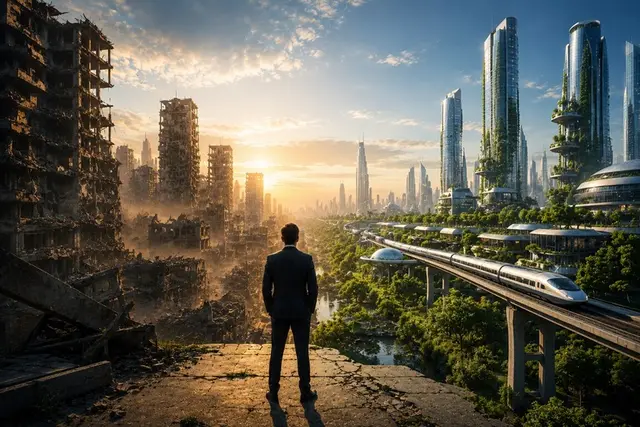
How The World Works Is Changing- The Forces Driving It In The Years Ahead
Top 10 Travel Trends That Will Refine How The World Explores In 2026/27Travel has always been about more than just moving from one place to another. It's a reflection of what people think about themselves how they see themselves, what they value, and what they're looking for beyond daily life. Travel landscapes of 2026/27 is an interesting mix between the desire for genuine exploration and the pressures of overtourism, between the convenience of technology and the hunger for an authentic human experience as well as the growing awareness of the footprint of travel on the planet and the ever-present desire for someplace new. Here are the top 10 travel trends that will alter the way the world travels into 2026/27.
1. Slow travel gains ground The Highlight ReelThe idea of packing every possible destination into a single trip, that is designed for social media posts rather than genuine travel, is getting beaten by a different approach. Slow travel that involves staying on fewer trips, using less accommodation instead of staying in hotels or shopping in local stores, and engaging with a place in a way that creates some sort of genuine familiarity is gaining popularity with those who have seen the highlight reel but found it lacking. This shift is a reflection of a larger review of what travel is actually about and what's important to it. spending time and money.
2. The rise of tourism has forced a rethinking of popular destinationsThe most popular destinations around the globe are implementing strategies to manage visitor numbers following years of unchecked growth in tourist numbers that have pushed infrastructure, ecosystems, and local communities to breaking point. Entry fees, visitor caps restrictions on access to sensitive areas, and higher fees are designed to cut down on the volume of visitors while increasing the amount of revenue per visit are becoming more frequent. For tourists, this means more planning, more time, and in some cases an actual review of which destinations are worth visiting. It's also sparking renewed interest in lesser-known alternatives that can provide comparable experiences but without crowds.
3. Sustainable Travel Changes From Niche To ExpectationAwareness of the environmental consequences of travel, especially aviation, has grown significantly, and it is beginning to shift behaviour in measurable enquiry ways. Tourists are more and more interested in alternative modes of transport that are lower in carbon, lodging with a genuine sustainability rating, and itineraries that add value for the places they visit rather than merely extracting enjoyment from them. The demand for credible sustainable transport options is rising fast enough that greenwashing, which is always frequent in this area has come under increased scrutiny. Operators that demonstrate genuine social and environmental accountability are finding it to be to be a powerful differentiation.
4. Technology Transforms The Travel Experience End To EndFrom AI-powered trip planning software that create personalised itineraries based on personal preferences, for seamless electronic border crossings, live language translation, as well as accommodation platforms which connect travellers with experiences far beyond the standard hotel room, technology is transforming every step of the travel process. The friction that was once a part of travel abroad, the wait times of paper work, the language barriers, and information gaps, is being steadily reduced. In the case of experienced travelers this usually means more time for the actual experience. For people who are new to travel and before had difficulty traveling internationally it's the removal of barriers that have stopped them from taking the plunge.
5. Wellness Travel is Expanded Into A Major IndustryWell-being has been identified as one the fastest-growing segments of the global travel market. The trend is to build trips around experiences that improve mental and physical health instead of treating wellness as a side benefit of the perfect vacation. In-depth wellness retreats and thermal spa destinations such as digital detox and wellness programs, yoga-focused retreats, and excursions centered around hiking meditation, and yoga are growing at a rapid rate. The post-pandemic review of priorities have made investment in health and wellness not only acceptable, but desired by a large and increasing number of travelers.
6. Culinary Travel becomes a primary MotivatorFood has always been a major part of the experience of traveling, but for a rising percentage of travellers, it's their primary reason rather than an unintentional side effect. Destinations are increasingly being selected for their culinary heritages in restaurants, markets and markets as well as the opportunity to learn recipes that are impossible to replicated in the home kitchen. Food tourism is a broad concept that spans every budget level, starting with street food trails in Southeast Asia to reservation-only tasting menus at celebrated restaurants. The worldwide popularity of food media and the communities that have grown around it has created the world's largest and most engaged population who eat well is not just a pleasure but is actually a method of cultural exploration.
7. Solo Travel is Continuing to Experience a Major InflationSolo travel, particularly for women, is one of the fastest growing trends in the industry. Greater information, stronger traveler communities, a better safety infrastructure in several destinations as well as a shift from seeing solo travel as an opportunity to be empowering instead of eccentric can all be attributed to. Accommodation companies have responded with more solo-friendly options with everything from hostels that are designed specifically for adult travelers to boutique hotels offering genuine single-room pricing. Travel operators have stepped up smaller-group trips specifically for those who are on their own and want to have company without the commitment of travelling with a specific companion.
8. The Return of Longer-Form Expeditionary TravelOn the opposite aspect of the weekend city break there is a rising interest in the more ambitious, long-distance journeys. Multi-month overland travel, longer-distance hiking systems and adventure-style travel which requires a lot of preparation and dedication are attracting people who want experiences that are completely different from ordinary life rather than simply moving to a new locale. Flexible work from home allows longer journeys to be possible for those not in a position to work or are retired. It is a dream to embark on an extremely significant journey and one that demands planning, resiliency, and delivers transformation rather than simply memories, is getting more people to share the experience.
9. Space And Extreme Destination Tourism Edges Toward RealitySpace tourism for commercial purposes is the reserved for the most wealthy, but the trajectory will be towards wider accessibility over time. This excitement is creating a genuine curiosity about what travel at the most extreme of frontiers looks like. It is also evident that extreme tourism, including Antarctica, deep ocean environments active volcanic sites and some of the most remote locations on Earth, are becoming more popular as both technology and specialist operators make previously impossible travel possible. A desire to experience experiences that feel genuinely rare in a time when most destinations feel mapped and accessible is fueling interest in the outer edges of what travel can mean.
10. Travel is a vehicle for Meaningful ContributionVoluntourism is not without its challenges. It has a difficult background, with well-meaning initiatives sometimes causing more harm that good. A more sophisticated model is emerging in which travellers strive to give back to the locations they visit without the need to replace local labour or setting external agendas. It is becoming increasingly commonplace to find conservation initiatives, skill-based volunteerism with real scientific merit, and models of community tourism that focus spending on local economies are gaining traction. The desire to leave an area as good as you found it or at least to make sure that your presence hasn't made things worse, is becoming a greater factor when a considerate and growing section of travellers plans and considers their journeys.
Travel in 2026/27 is more varied, more self-aware, and in many ways more exciting than it ever was. The tensions that it creates between access and preservation as well as convenience and depth the individual aspiration and the collective accountability, can't be easily resolved. However, the operators and travelers engaged in a serious way with these tensions are creating a different kind of exploration that is more honest and more relevant than the model it is slowly replacing. To find further insight, check out some of the top pohjolanews.fi/ to read more.
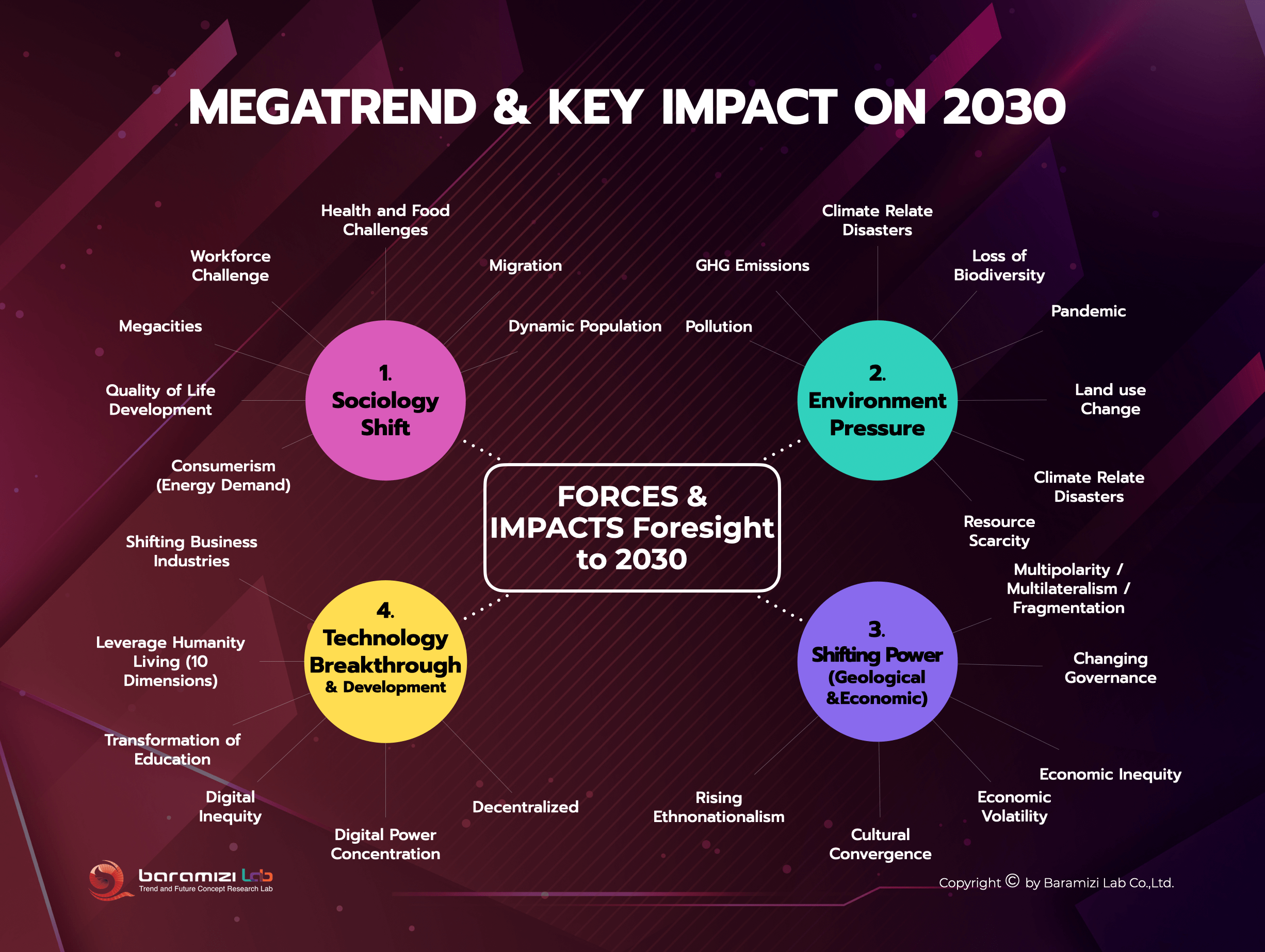 The 10 Family Shifts Every Family Today Ought To Know In 2027
The way we parent has always been influenced through the societal, economic and technological contexts which it takes place. the 2026/27 context is different in ways that are producing both new pressures and new opportunities for families. The present landscape for parents includes a digital environment of unprecedented complexity, evolving understanding of the development of children and their mental well-being, major economic pressures that affect family life and a time of cultural change that is changing the way we think regarding how children are educated. Here are the top ten parenting ideas that every modern family ought to be aware of when they reach 2026/27.
1. Screen Time Provides Chats that are Screen QualityThe debate about screen-based children has evolved beyond the simple measure of all screen time to more nuanced discussions regarding what children actually are doing when they're on screens, with whom and with what context. Research is increasingly separating passive consumption and interactive engagement, as well as creative production, as well as social connection via technology, and concluding that these have an impact on development that is different. Parents and teachers are shifting from trying to enforce limitations on time that are difficult to sustain, and instead are focusing on developing children's capacity to interact with digital content critically, intentionally, and with healthy boundaries, skills that will serve their interests far better than any restrictions that expire when parental control is eliminated.
2. Mental Health Awareness Transforms How Parents Respond To ChildrenThe rapid increase in mental health literacy over the last decade has altered the way parents approach and react to kids' emotional and behavioral issues. The neurodevelopmental and anxiety issues along with emotional dysregulation and the negative effects of bad experiences are being understood more thoroughly by a parent generation that has been benefited by more accessible conversations about mental health. As a result, there is an improvement in early identification and resolving issues, fewer stigmas when seeking support, and parental strategies that put emphasis on an emotional connection and psychological safety as well as the traditional developmental milestones. Services for mental health of children are under severe pressure in most countries, but the demand that causes this pressure represents a positive increase of awareness and behaviour.
3. The rigors of intensive parenting In the face of growing pushbackThe concept of intense parenting, that involves heavy parental involvement in all aspects the lives of children, packed activity schedules, continuous enrichment, and treating that sees childhood as a project to be improved, is facing meaningful cultural tension. Research on the value in unstructured play, developmental importance of boredom as well as the risk of a crowded children's lives for stress and autonomy growth, and also the unnecessary stress that intensive parenting puts upon parents themselves is catching the attention of mass audiences. The pushback is not toward inattention, but towards a shift which allows children to have more space greater autonomy, as well as greater opportunities to manage challenges independently as a foundation for resilient.
4. Technology Shapes Both The Challenges as well as the Tools of Modern ParentingDigital technology is simultaneously one of the most significant problems that parents have to face and they have one of most powerful tools for supporting parenting. AI-powered educational platforms can personalize learning so that they can help children with various needs. Communities online connect parents facing similar issues with experiences, information, and solidarity. Tools for monitoring and safety give parents the ability to see what digital space that their children are. Yet, online pressures on children are a challenge for parents to establish and maintaining digital boundaries across an increasingly connected technology ecosystem as well as the difficulties of getting children ready for a digital world that is evolving rapidly all pose genuinely fresh parenting challenges for parents who do not have established playbooks.
5. Co-parenting and various family structures Are CommonThe diversity of families that have children in 2026/27 are greater than ever before, and the cultural and institutional frameworks around family life are gradually but in a meaningful way, changing in response to this reality. Co-parenting arrangements in the aftermath of a relationship break-up, same-sex parent families, single-parent families, blended families and multi-generational families are all represented in significant numbers. The main predictor of positive outcomes for children in each of these types of configuration is an improvement in the relationships as well as the stable and warm community, rather then the particular model of family structure. Parenting support, advice, and community support are increasingly focused towards this understanding rather than a single normative family model.
6. Fathers and non-primary caregivers take on more active rolesCaregiving roles within families is shifting, driven by shifting expectations in the culture, more equitable parental leave policies across many countries, a range of flexible work arrangements which make active fatherhood likely to be attainable, as well as men of the present hope to play a greater role in the lives of their children in a way that the previous generations didn't. This shift isn't uniform and uneven across various socioeconomic, cultural, and geographical contexts, but the direction is evident. Research consistently shows advantages for children, parents, fathers and family members where caregiving is equally dispersed, which is a convincing basis for evidence in addition to the increasing cultural momentum.
7. Financial Pressures Change Family Decision-MakingThe economic demands facing families in 2026/27 are substantial and influence decisions regarding the size of the family, childcare, education, housing, and the distribution of paid and unpaid labour in ways that can be seen across the available data. The costs of childcare in a variety of countries are a major component of household income, making an income that is not sufficient for couples with a dual income in particular at less income. Costs for housing impact decisions about the places families reside in and how families spend their time in. The goal of providing children with the opportunities as well as experiences that earlier generations thought were normal is being pushed up against economic realities which require difficult prioritisation. Families with financial stress are a reliable predictor for poorer outcomes for children. This makes the economics of parenting an issue for policy as well and a personal issue.
8. Nature And Outdoor Experience Become Deliberate Parenting PrioritiesThe growing number of children who grow to be immersed in digital urban, indoor and outdoor environments has resulted in significant parental and educational attention to ensuring that children engage with nature as a priority, rather than as an outcome that happens to be improbable. Research on the developmental, psychological and physical benefits of a regular outdoor and natural-based experiences for children is strong and growing. Forest school programs, outdoor education, and the simple prioritisation of unstructured outdoor activities are all in response to a recognition of the fact that children's natural connection to the world around them must be actively cultivated rather than thought of as a result of the surroundings that many families live in.
9. Educational Philosophies Diverge beyond the traditional schooling systemParental involvement with alternative education for traditional schooling has risen substantially. Educational alternatives such as democratic schools, home learning as well as Montessori and Waldorf approaches, hybrid models consisting of home learning in conjunction with the group setting, and microschools catering to small families are all appealing to parents who believe that traditional schooling isn't meeting their children's needs, values and learning styles effectively. The outbreak has shown many families that learning can be achieved effectively without traditional school settings A significant portion of them have not gone back to the standard model. Educational technology makes the opportunities available to other approaches greater than at any other time making it more accessible to the exploration of education.
10. "The Village Model Of Childraising Looks for a Newer FormThe demise of established family connections, solid communities, and informal systems of mutual support that were traditionally used to support families with children has left many parents feeling lonely and burdened by obligations shared by their predecessors in a larger sense. The search for modern equivalents of the village and communities consisting of families sharing resources along with support and presence in the lives of one another, is generating new forms such as intentional community, cooperative childcare arrangements, as well as neighbourhood networks that revolve around sharing parenting assistance. The internet and the tools to connect parents who have similar struggles provide the possibility of a partial replacement, but the most meaningful responses can be those that result in real physical closeness and ongoing engagement between families that choose to raise their children in a genuine relationship with one another.
The parenting of 2026/27 will be demanding, rewarding, and more aware than at the other points in history. The changes above don't describe a single correct approach in raising children since nothing like that exists. What they do represent is a society that is thinking in a more serious, open way as a whole about what children require in order to succeed, and searching with sincere intent for conditions as well as relationships and environments in which they can thrive. For further detail, head to a few of the leading observerireland.org/ for further reading.